
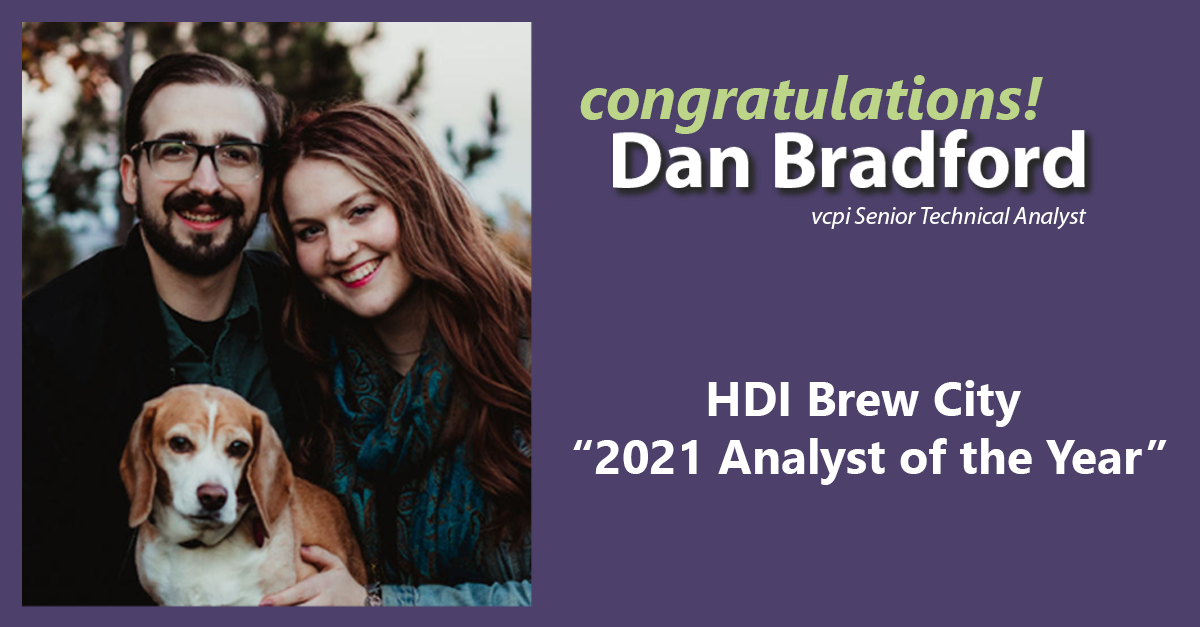
In 2004 HDI, an international organization for technical support professionals, introduced the Analyst of the Year award. Each year, HDI works with their local chapters around the globe to identify the industry's top first-level support analyst. Individuals who are nominated at the local chapter level compete with their peers locally, regionally, and globally for this prestigious award.
No that is not a typo. Phone phishing, or vishing, is the criminal practice of using the telephone system to gain access to personal and financial information for the purpose of committing fraud. Vcpi has noticed an uptick in vishing over the past several months. According to the Centers for Disease Control (CDC), “Malicious cyber criminals are attempting to leverage interest and activity in COVID-19 to launch coronavirus-themed campaigns.”
Patient care is an integral part of the senior living workflow. Finding a way to distribute care across patient channels is difficult enough. But, what about employee care? All of those caregivers who are baked into the senior living architecture need access to quick, accurate IT support that allows them to continue to produce results, without unnecessary frustrations.
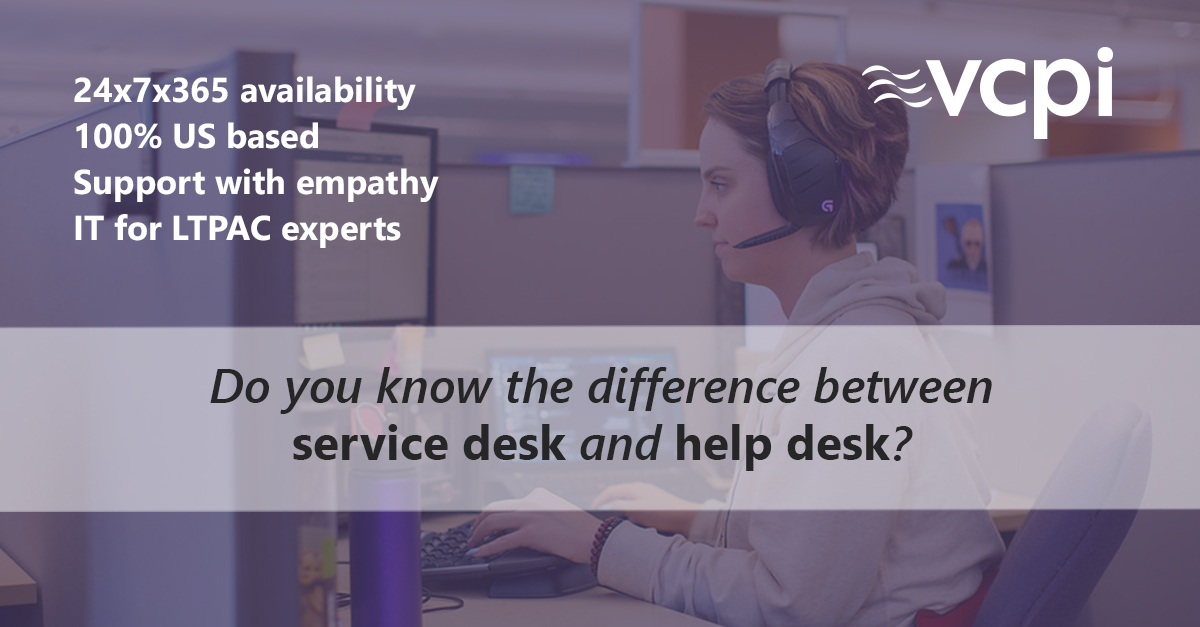
To provide this support, many Senior Living and Post-Acute Care rehabilitation providers choose to implement a service desk or help desk to tackle those mission-critical IT problems. But, what's the difference?
What separates a service desk from a help desk?
Intuitively, many people think of senior living as a somewhat traditional and tech adverse industry. With the focus so squarely on giving care in perpetuity to patients that need consistent hands-on attention, the core mission of senior living is understandably seen as a very traditional hands-on concept. But in reality, the complex needs of patients receiving these services are actually the perfect environment for many of our most recent innovations from hardware devices to software to services.
Mobile device theft constitutes a major source of HIPAA breaches in senior living communities. According to a PubMed study, most HIPAA breaches are caused by the theft or loss of mobile devices on which Protected Health Information (PHI) is stored. The online journal Perspectives in Health Information Management reports that mobile technology is revolutionizing healthcare. Providers who work in the senior living industry are increasingly using mobile devices such as smartphones, laptops, and tablets at the point of care. This is good news for residents and staff alike, but it also means that administrators and employees must be extra-vigilant about sensitive patient data to make sure it cannot be compromised by stolen or lost devices.